The Challenge of Over-Exhaustion in High Performance environments
In a world that prioritises thinking, analysis, and perception, it makes sense that the mind has taken the lead. It solves problems, creates meaning, and shapes how we see reality. But we took it too far.
We’ve lost connection with the body. A gap has formed between what the mind believes or wants, and what the body actually feels and is allowed to experience.
Over-exhaustion (burnout) starts within that gap.
‘Burnout’ is recognised by the World Health Organization (WHO) as an ‘occupational phenomenon’ - specifically as a syndrome resulting from chronic, unmanaged workplace stress. While it is not a medical or mental health condition, it has been classified as a syndrome, meaning a collection of symptoms or signs associated with a specific health-related cause. Burnout is a state of physical, mental, and emotional exhaustion. It can occur when you experience long-term stress and feel under constant pressure.
How Over-Exhaustion Shows Up
On Individual Level
“What’s the point?” thinking
Lack of confidence
Feeling ineffective or like nothing you do makes a difference
Difficulty concentrating or making decisions
Less patience in meetings or conversations
Cynicism or sarcastic tone about the company or clients
In Cultural Atmosphere
Increase in cynicism, sarcasm, or blame
Low morale that doesn’t lift even after wins
Reduced ownership (“not my job” mindset)
More internal conflict or passive-aggressive communication
The culture shifts from engaged → guarded → defensive.
On Company Level
People leaving after relatively short tenures
“Quiet quitting” — employees staying but disengaging
High employee turnover (especially among high performers)
Rising sick leave (especially stress-related complaints)
Increased absenteeism (frequent short-term call-ins)
In Leadership
Leaders become reactive instead of proactive
Less clarity in communication and decision-making
Increased micromanagement or, conversely, avoidance
Leaders themselves showing signs of exhaustion
Burnout often cascades top-down and bottom-up at the same time.
The Gap Between Understand Burnout And Recovering From It
Approaching burnout through mental approaches such as mindfulness, traditional talk therapy or meditation can be helpful, but it tends to leave an important gap: the physical symptoms of the body (headaches, migraines, digestive issues, breathing problems, back pain, insomnia, anxiety etc.). And so, instead of only seeing those symptoms as problems to solve or as uncomfortable truths of exhaustion, through our body-oriented approach we approach those symptoms as the body’s attempt to recover, and we aim to give it the right environment to do that.
Burnout is primarily a result of over-exhaustion, while the body doesn’t have enough energy to rest deeply. This creates a downward spiral where the need for deep rest and recovery will create an opposite effect: more exhaustion.
Somatic Bodywork For Corporate Environment
Somatic Bodywork is a form of reverse engineering. Rather than approaching wellbeing primarily through the mind, we engage with the body. By working with physical symptoms, suppressed emotions and limiting patterns, we support recovery from bottom-up and top-down.
Clients learn what they do in a specific situation that limits their capabilities and leaves them unfulfilled, exhausted or unmotivated.
Qualities such as resilience, confidence, courage, vitality, and feeling energised are not abstract ideas—they are real physical experiences. The same is true for their opposites: insecurity, anxiety, exhaustion, or the inability to speak up. If we are capable of creating these limiting states within our bodies, we are equally capable of creating their opposites.
Through somatic bodywork sessions, individuals discover what they do in their body to lose confidence, withdraw or push-through under pressure, or hold back when they are called to step forward. Each person carries a unique history, and therefore develops unique ways of responding to stress—especially visible within high-performance environments like corporate or start-ups.
In a process participants learn how they respond to stress, how to undo these limiting patterns and start to live a life where they are not constantly busy with recovering from intensity or avoiding stressful situations, but rather have their body’s signals as a compass for better performance and deeper fulfilment. In other words: how to be confident when pressure rises.
Investing in Human Capacity
For fast-scaling, high-performance companies, investing in embodied awareness and human capacity is not a luxury—it is a strategic advantage. Organisations that actively develop the way their people handle pressure, communication, and internal patterns see measurable gains in productivity, adaptability, and innovation.
Through these sessions, your team members learn to recognise and interrupt unconscious behaviours that limit performance—such as stress reactivity, miscommunication, and energy leakage—and replace them with clarity, ownership, and effective action. The result is not only more resilient individuals, but teams that collaborate with greater precision, recover faster from challenges, and sustain high performance over time. In a competitive environment where speed, decision-making, and culture directly impact outcomes, this work translates into sharper execution, stronger retention, and a workforce that can continuously evolve with the demands of the business.

How a session works
Neglecting the physical level (the body) of our experience may offer temporary relief, but does not address the root of the issue. These roots are found in the conditions and patterns held within the body—often created as unconscious attempts to resist against discomfort, fear, or pain.
In the sessions, participants learn to recognise their automatic responses to stress and pressure. By becoming aware of these patterns and learning how to interrupt them, they open the possibility for change and recovery.
This allows for the development of a more resilient, relaxed, and responsive way of being. Participants learn what it actually feels like to relax fully, how they are suppressing their emotions and what consequence this has in their life and in their body.
By gradually releasing tension—untying the knots, so to speak—the body regains its natural capacity for balance, adaptability, and health.
Practically
In these individual sessions participants learn about the patterns of their behaviour, how they load up in their body and receive practical tools to train the skill of being under pressure and allowing their body to restore balance.
These sessions are:
Conducted online or in-person (preferred)
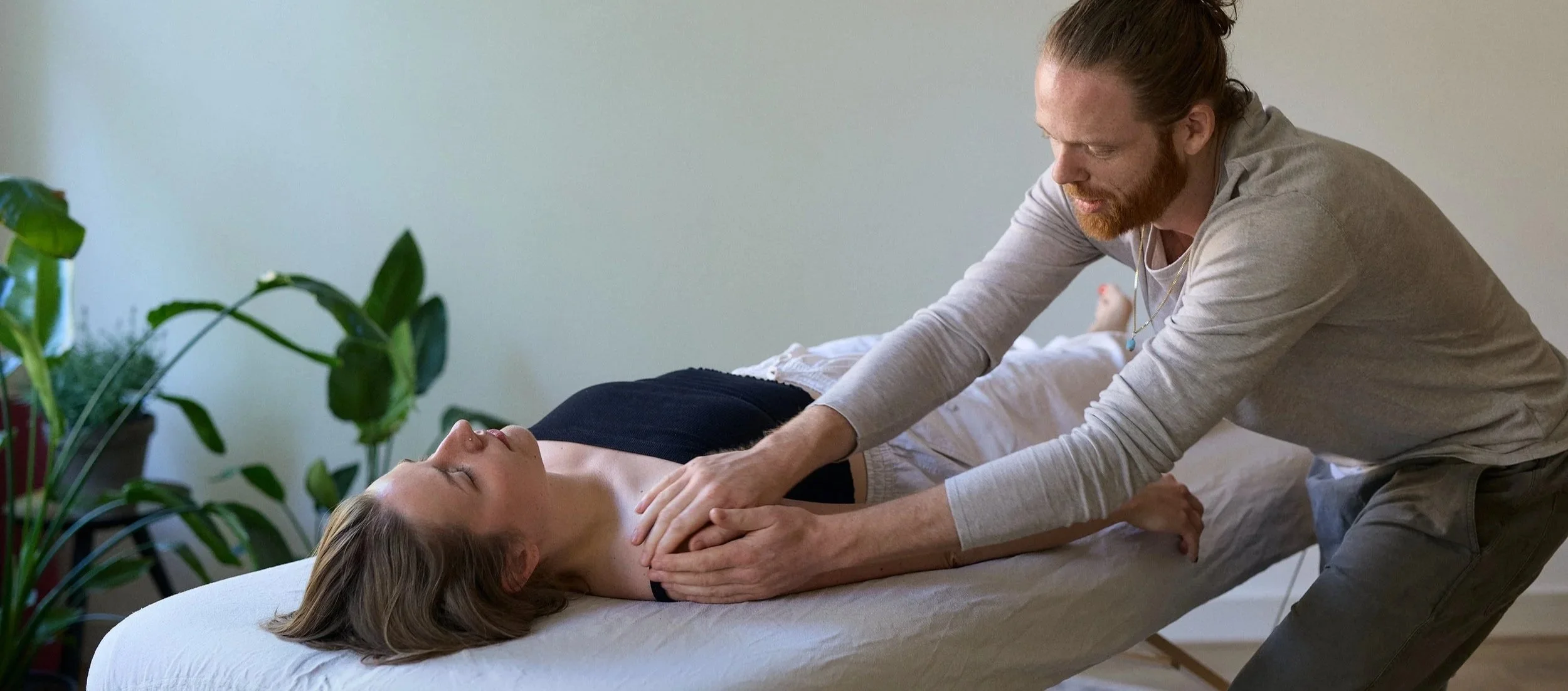
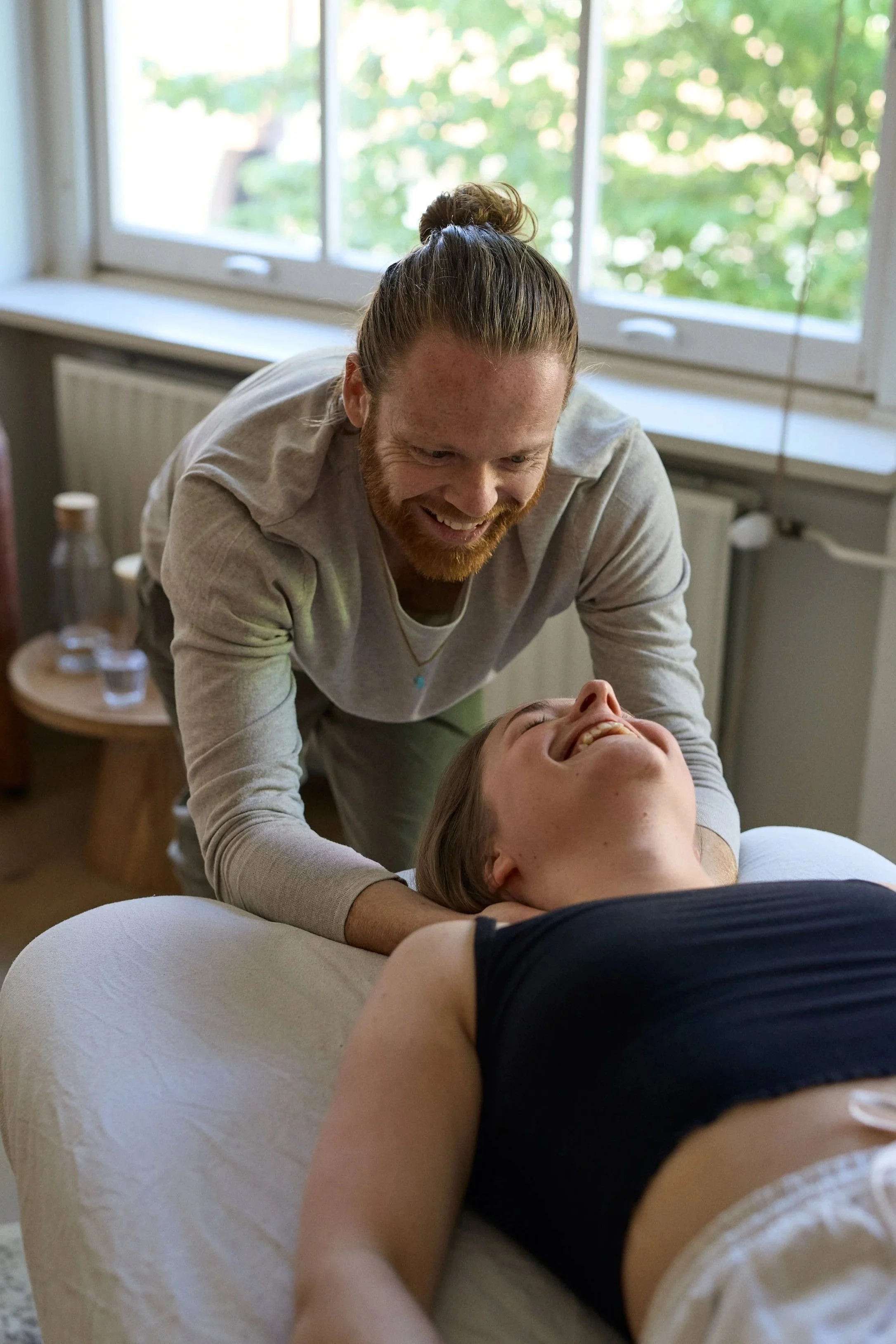
Include breathing, touch (with consent), movement, talking, and counseling.
Are always tailor made to the individual
60 minutes per sessions
Include a first discovery call
A personal learning trajectory
Trackable by an assessment at the beginning and end
Generally people experience the sessions as a relief, and leave more in touch with their body and relaxed after a session.
FAQ
-
Based in Amsterdam, Leander Ruivenkamp is a Somatic Therapist and Bodyworker specialising in the Grinberg Method. He works one-on-one to help people process trauma and understand their bodies better. Leander is also the Founder of the Amsterdam Academy for Body Learning and supports practitioners to deepen their training.
-
We start the session by discussing the theme / issue / challenge you want to work on. Through attentive touch and guided awareness, we explore how you hold tension, breathe, and respond to stress / emotions that are triggered when you talk about the issue.
We then work to drop or undo the the habitual patterns that show up in the body and allow space for something new and/or different to emerge.
-
60 mins
-
Most sessions are conducted with partial clothing / underwear. However if you are more comfortable with clothes, that’s also fine.
-
You can reschedule or cancel your appointment free of charge 24 hours prior.
Any changes or no shows after that 24 hour period incur the full 100% fee.
-
Please email: info@leanderruivenkamp.com